 Most of us hold a special place for well scented candles within our heart. We often give or receive these as gifts from close and special friends. They come in all shapes and sizes and are saturated with almost any fragrance you possibly can image.
Who does not love a candle-light dinner party or the many candles that light up over the festive Christmas time? We also love them as a mood enhancer when we are feeling low or lonely, desire to create trust, calmness and peace, or when we wish to great an exciting and mesmerizing atmosphere. The only thing is – do we actually know what our particular candles are made of, where they come from, and what chemicals they emit into our direct surroundings which we, our loved ones, friends, colleagues or clients, as well as our pets, inhale?
When researching down this rabbit hole one almost requires a degree in chemical engineering in order to navigate the minefield of fragrances. In addition to this one almost requires a degree in health literacy, so that one can truly understand what ingredients candles may or may not contain, and how these affect our personal health and wellbeing.
Most of us agree that we do not have the time nor do we often have the patience and energy to examine and look up all the ingredients whilst shopping, and by the time we get home this task is often forgotten. As I genuinely value my personal health and wellbeing this was not an option which is why I chose to do some further reading once and for all, and share some findings with you.
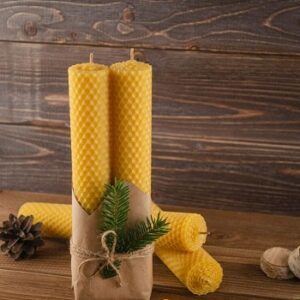 The best approach is to avoid the use of harmful and toxic candles altogether. You may now wonder what the alternatives might be.
Firstly, you could always explore your farmers market and local bee keepers within your vicinity or region where you live. Pure 100% natural bees wax make some of the best candles and no flavours or fragrances are required. These bees wax candles have a lovely natural sweet honey like aroma. If of course you would like a particular fragrance with your candle, then you can always try and find brands that use a combination of bees wax and 100% pure high grade essential oils. But make sure you read the labels and product disclosures or manufacturing process, as some mix bees wax with paraffin.
Two brands recommended in Australia are Suz E Bee Candles and Happy Flame.
Additional to candles, I love to defuse my home with pure high-grade essential oils, such as those from dōTERRA. dōTERRA offers a wide range of quality essential oils which are all Certified Pure Therapeutic Grade® (CPTG). I currently love diffusing Wild Orange, Cinnamon Bark, Cardamon and Clove to awaken all my childhood Christmas memories. If you would like to get your hands on some oils for 25% off retail price, you can order these here.
If you are creative and love doing things yourself then how about making your own pure bees wax organic candles scented with a high grade essential oil of your choice and liking? This is the perfect option for those of us who love to experiment and be creative. From my own experience, these home-made candles also make the most wonderful and personalized gifts. In choosing healthy alternative options you empower yourself in taking care of your personal health and well being, as well as contribute to a more sustainable healthy planet.